Transform Your Projects with Gradient Terrain Backgrounds
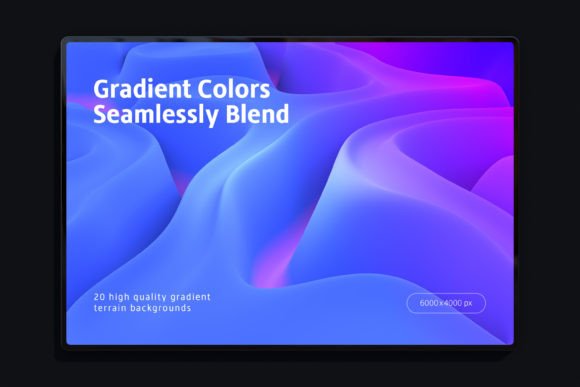
There is a distinct shift happening in digital design right now. We are moving away from flat, static color blocks and stepping into environments that feel immersive and alive. If you have been searching for that perfect visual foundation that balances sophistication with organic energy, you have likely realized that generic stock photos often miss the mark. They lack the subtlety needed for modern layouts. This is exactly why we developed this exclusive collection of 20 Gradient Terrain Backgrounds. These aren't just random color washes; they are meticulously crafted digital landscapes designed to capture the soul of the great outdoors, offering a versatile foundation for everything from high-stakes corporate branding to intimate personal projects.
Understanding the visual language of these backgrounds is key to unlocking their potential. At their core, these assets utilize the principles of modern typography and color theory—specifically the concept of smooth transitions—to create depth. Think of them as the digital equivalent of a painter’s canvas. You get the subtle, atmospheric haze of dawn breaking over a misty valley, or the sharp, electric vibrancy of a sunset hitting a desert ridge. The gradients are not harsh; they flow naturally, mimicking how light behaves in the real world. This creates a "personality" that is both professional and deeply organic. Unlike a standard serif font or sans serif font which dictates readability through letterforms, these terrains dictate the mood of your project. They provide a visual hierarchy that draws the eye without screaming for attention, allowing your typography and content to take center stage.
The Art of Visual Hierarchy and Atmosphere
As a designer or brand strategist, you know that the background is rarely just "background noise." It is the silent partner to your logo design and your messaging. When you pair a clean, geometric display font with the organic curves of a terrain gradient, you create a powerful contrast. This interplay is essential for visual hierarchy. For instance, if you are working on editorial design for a nature magazine or a travel blog, using a gradient that mimics a forest canopy can subtly reinforce the theme without overpowering the text. It guides the reader's eye downward, creating a rhythm that improves engagement. We have seen these backgrounds work exceptionally well in web design, where they can serve as a full-page hero image that loads quickly and scales perfectly across devices, unlike heavy video files or uncompressed photographs.
But the utility extends far beyond the screen. Consider the realm of packaging design. Small business owners and crafters are constantly looking for ways to make their products pop on the shelf. A "premium" look isn't always about gold foil; often, it is about color depth. By utilizing these high-resolution files, you can create labels and boxes that feature rich, deep color transitions. Imagine a skincare brand using a soft, lavender-to-white gradient to evoke calmness, or a tech startup using a deep oceanic blue gradient to suggest depth and reliability. These backgrounds allow you to influence brand perception instantly. They tell a story of quality and attention to detail before the customer even reads a word of the copy.
Practical Applications for Modern Creatives
Let’s talk about the practical side of implementation. You have a project, a deadline, and a specific vision. How do you make these assets work for you? The versatility of this collection lies in its adaptability. For social media graphics, where you have roughly three seconds to stop a user from scrolling, a vibrant terrain gradient can be the hook. It provides a consistent aesthetic across your Instagram grid or LinkedIn banners, reinforcing brand identity through color association. When you are designing a pitch deck for investors, using these subtle gradients in the background can elevate the entire presentation, making it look like a bespoke design asset rather than a template pulled from a generic library.
For those involved in digital art or content creation, these files serve as a fantastic starting point for compositing. Because they are high-resolution, you can zoom in and crop specific sections to create unique textures. A single terrain background can yield dozens of different looks depending on which slice of the gradient you use. This is particularly useful for web design elements like dividers, cards, or hero sections where you need a specific aspect ratio but want to maintain a cohesive color story.
Evaluating Fit and Testing Your Design
Choosing the right background is an exercise in restraint and evaluation. It is tempting to pick the most vibrant option, but the best choice depends on your content. If your project relies heavily on text—such as a whitepaper or a long-form blog post—you need a gradient that sits in the mid-tone range. Avoid gradients with extreme dark-to-light shifts if you plan to overlay body text, as this can destroy readability. Instead, look for the "misty" or "dawn" options in the collection, which offer a more uniform luminosity.
When testing font pairing, treat the gradient as your third wheel. If you are using a bold, heavy script font or handwritten font for headers, ensure the background doesn't have too much "noise" or texture that competes with the swirls of the lettering. Conversely, if you are working with a clean, minimalist modern typography setup, you can afford to use a more dramatic, high-contrast terrain. Always view your mockups on multiple devices. A gradient that looks rich on a calibrated monitor might appear washed out on a mobile screen, so checking the contrast ratio is a step you cannot skip.
Licensing and Consistency in Commercial Use
For entrepreneurs and agencies, the legal and logistical aspects of design assets are just as important as the aesthetics. When you invest in a collection like this, you are securing the rights to use these images across commercial and personal projects. This eliminates the headache of tracking down attribution or worrying about copyright strikes on your client's website. It allows for consistency. You can use the same gradient family across a client's business cards, their website header, and their trade show booth, creating a unified visual language that builds recognition.
Ultimately, these Gradient Terrain Backgrounds are more than just pretty pictures; they are functional tools for visual communication. They bridge the gap between the digital and the natural world, offering a sophisticated palette that adapts to your creative needs. Whether you are a hobbyist creating a scrapbook page or a marketer launching a global campaign, having these high-quality gradients in your toolkit ensures that your work always has a solid, professional, and visually stunning foundation.