Watercolor Tulip Flower Backgrounds for Every Project
The Art of Digital Paper: Why Quality Matters
When you are building a brand, designing a wedding invitation, or creating content for social media, the background is rarely just a background. It sets the entire mood. A stark white canvas feels clinical and modern, while a textured watercolor background feels organic, emotional, and artistic. However, sourcing high-quality design assets can be a challenge. Many free resources offer low-resolution images that pixelate the moment you try to print them, or they carry complex licensing that restricts commercial use.
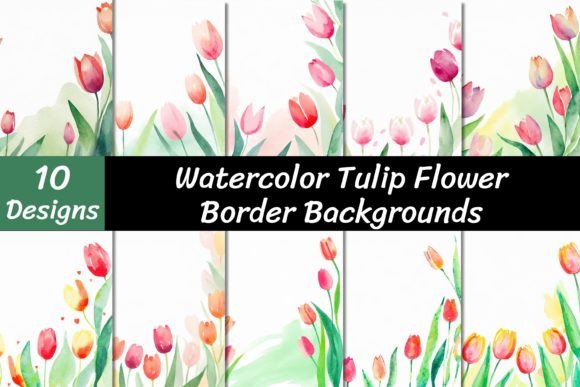
This is where a dedicated digital paper pack, specifically the Watercolor Tulip Flower Backgrounds, becomes a vital part of your toolkit. These aren't just random images; they are curated textures designed to bridge the gap between digital convenience and fine art aesthetics. The visual characteristics of these papers are defined by their soft, bleeding edges and the organic unpredictability of watercolor paint. Unlike vector graphics, which are mathematically perfect, watercolor textures possess a "human" quality. They mimic the way pigment settles into paper grain, offering a tactile feel even on a flat screen. The tulip motif adds a layer of botanical elegance—tulips are universally associated with spring, renewal, and sophistication. They are less cluttered than roses and more architectural than wildflowers, giving your designs a clean yet natural structure.
Practical Applications: Where Watercolor Tulip Borders Shine
The versatility of a Watercolor tulip flower border background is surprisingly broad. For the entrepreneur or small business owner, these files are not just pretty pictures; they are tools for brand identity. If you run a bakery, a florist shop, a wellness studio, or a boutique clothing line, your visual language needs to communicate freshness and care. Using these backgrounds for your product packaging inserts, thank-you cards, or loyalty cards reinforces that brand personality without needing to hire a painter for every variation.
For marketers and content creators, engagement is the currency. Social media platforms like Instagram and Pinterest are highly visual. A watercolor tulip background serves as an excellent base for quote graphics, carousel posts, or story backgrounds. Because the texture is organic, it doesn't compete with your typography. You can overlay bold sans-serif fonts over these soft pastels, and the text remains readable while the image provides depth.
Publishers and bloggers will find these assets particularly useful for editorial design. If you are writing about gardening, lifestyle, or health, a subtle watercolor border can frame your text beautifully. It works well for e-book covers, blog headers, or downloadable checklists. The key is that these files are high-resolution. At 3600 x 3600 pixels and 300 DPI, they are print-ready. You can use them for physical stationery, wedding invitations, or scrapbooking without worrying about blurry edges. The "watercolor tulip flower frame border backgrounds" offer a structured way to highlight content, essentially acting as a soft vignette that draws the reader's eye to the center.
Design Strategy: Pairing and Professionalism
Using a textured background effectively requires a bit of strategic thinking regarding visual hierarchy. Because the Watercolor Tulip Flower Backgrounds have a distinct style, your typography choices are critical. If you use a complex, highly decorative script font, it might get lost in the brushstrokes. Instead, consider pairing these organic backgrounds with clean, geometric typefaces. A modern sans-serif font offers a beautiful contrast to the hand-painted look. This juxtaposition—digital precision meeting organic art—often results in the most professional-looking designs.
Here is a practical approach to using these assets in your workflow:
- Evaluate the Palette: Before applying the background to your entire project, look at the specific color washes in the JPEG. Do they complement your brand colors? If your brand uses navy blue, a pastel pink watercolor might clash unless used as a subtle accent.
- Opacity Adjustments: If the tulip design is too bold for your text, don't be afraid to lower the opacity of the background layer in your design software (like Photoshop or Canva). This turns it into a faint "ghost" texture that adds sophistication without overwhelming the message.
- Cropping for Focus: You do not always need to use the whole 3600 x 3600 image. Sometimes, cropping in on a specific cluster of tulips or a corner of the watercolor wash creates a stronger focal point.
Technical Specifications and Usability
One of the most common frustrations in the design world is the "royalty-free" trap—finding an image that looks great on screen but fails in print. The Watercolor Tulip Flower Backgrounds pack addresses this by offering high-resolution files (300 DPI). This is the industry standard for print quality. Whether you are printing a large poster or a small business card, the integrity of the image holds up.
The files are delivered in JPEG format, which is universally compatible with almost every design software, from Adobe Illustrator to Microsoft Word. However, it is important to note the delivery method. These files come zipped to ensure fast and secure transfer. You will need an unzipping software like WinZip or WinRAR to extract them. This is a standard security practice for large digital assets, but it is a technical step that some beginners overlook. Ensure your computer is ready to handle ZIP files so you can access your new design assets immediately.
For those concerned with commercial licensing, these assets are typically designed for commercial use, meaning you can use them in products you sell (like planners or invitations). Always review the specific license terms provided with the download to ensure your specific use case is covered, but generally, a digital paper pack like this is intended to be a foundational element for your creative business.
Final Thoughts on Creative Utility
Ultimately, the goal of any design asset is to save you time while elevating your output. Watercolor tulip flower border backgrounds provide a shortcut to elegance. Instead of spending hours trying to paint a texture digitally or scanning real watercolors (which often requires heavy cleanup), you have a library of ready-to-use artistic foundations.
Whether you are a crafter making stickers, a marketer designing a spring sale flyer, or a publisher creating a cover for a romance novel, the appeal of watercolor is timeless. It softens the digital experience and brings a touch of the handmade to the modern world. By integrating these backgrounds into your projects, you are not just adding color; you are adding personality, depth, and a professional polish that stands out in a crowded digital landscape.